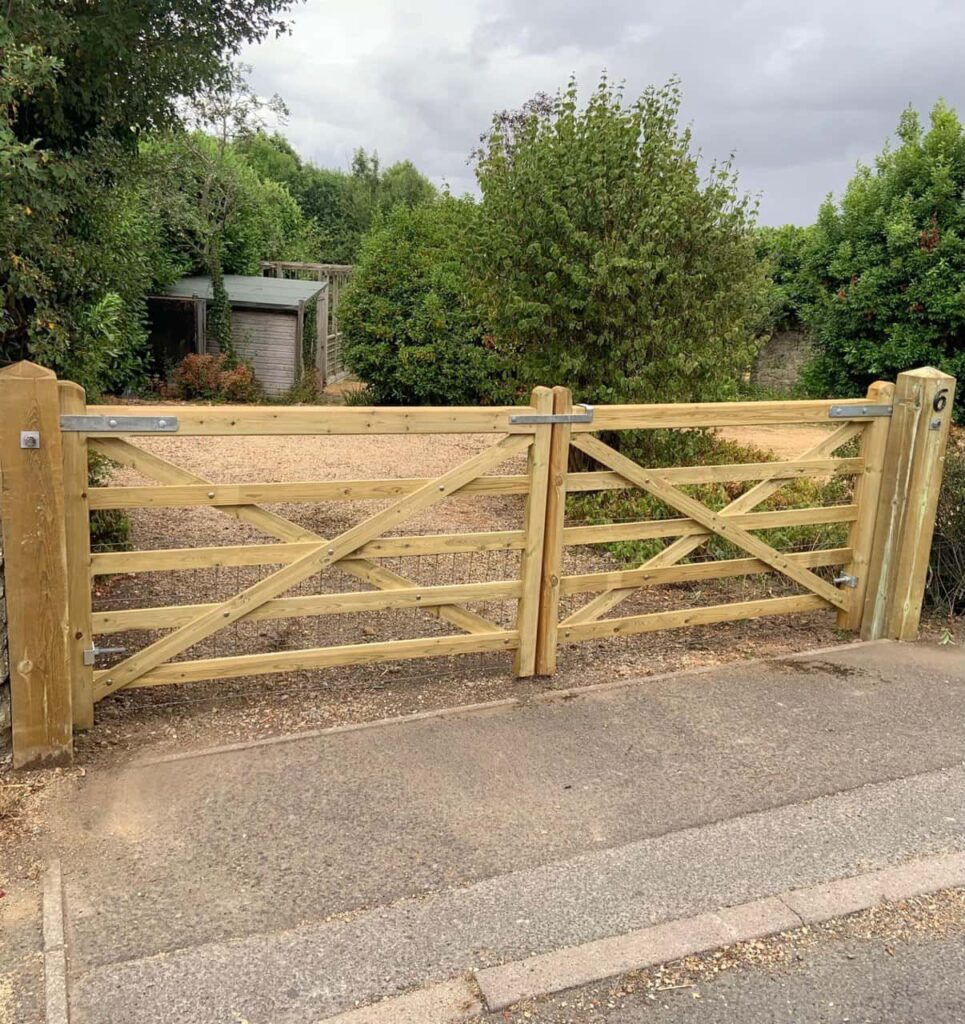
What Should You Consider When Choosing New Driveway Gates?
Driveway gates can provide a clear entrance, complement the surrounding fencing and help control access to a property. However, choosing a suitable design involves more than selecting a style that looks attractive. The available space, driveway layout, ground conditions and way the entrance is used all affect which gate will perform well.
For property owners in Wisbech, Cambridge, careful planning can prevent problems such as restricted access, awkward opening movements or gates that place excessive strain on their posts. A properly considered installation should be practical, well-proportioned and suited to the property.
Choosing Driveway Gates That Suit Your Property
The best driveway gates balance appearance with everyday usability. Measurements, materials and support structures should be considered together rather than as separate decisions.
Decide What the Gates Need to Achieve
Start by identifying the main purpose of the new gates. Some homeowners want to create a more defined boundary, while others are primarily concerned with privacy, controlling access or improving the appearance of the entrance.
The purpose influences the height, spacing and overall construction. Solid gates offer more screening, whereas open or partially open designs retain visibility and may make the entrance feel less enclosed.
Measure the Entrance Accurately
The width between the gate posts is only one part of the measurement process. The gate design must also account for hinges, latches, clearances and the space required for each leaf to move.
A narrow opening may be unsuitable for an unnecessarily heavy or complex design. Wider entrances require gates and support posts capable of handling greater weight and leverage. Accurate measurements help ensure that vehicles can enter comfortably without the gates appearing out of proportion.
Consider the Direction of Opening
Traditional driveway gates normally swing on hinges, so there must be enough clear space for them to open fully. The position of parked vehicles, walls, fencing, planting and changes in ground level can all affect the available movement.
If the driveway rises behind the entrance, inward-opening gates may catch on the surface. Where space is restricted, a sliding arrangement may be worth considering, provided there is sufficient room beside the opening for the gate to travel.
Account for Ground Levels
An entrance that looks level may still contain a slight slope or uneven section. These variations can affect the clearance beneath the gate and its ability to open freely.
Ground levels should be assessed across the complete arc of movement. Too little clearance may cause the gate to scrape, while excessive clearance can leave the installation looking unfinished. Careful setting-out helps achieve a practical gap without compromising the overall appearance.
Choose a Suitable Material
Driveway gates are available in different materials and styles, but the choice should suit the property, adjoining fence and amount of exposure at the entrance.
Timber gates offer a traditional and versatile appearance. Their construction should be appropriate for the width of the opening, with sufficient bracing to help retain shape. The design should also allow for the natural movement of timber as conditions change.
The material, frame and fixings must work together. A visually substantial gate still needs a structure capable of supporting its weight over repeated use.
Ensure the Posts Provide Adequate Support
Gate posts carry considerable loads. Every opening and closing movement transfers force through the hinges into the posts and their foundations. Wider or heavier gates increase this demand.
Posts that are undersized, poorly positioned or inadequately supported can lean or move, causing the gates to drop out of alignment. This may lead to uneven gaps, dragging edges and difficulty operating the latch.
The posts should therefore be specified as part of the gate installation rather than treated as a minor finishing detail.
Match the Gates to the Existing Boundary
New gates should connect neatly with the surrounding fencing, walls or hedging. Their height and style do not need to be identical to every boundary feature, but the transition should appear deliberate.
Matching timber details, consistent spacing or complementary finishes can create a unified entrance. Where the boundary is open and informal, very tall solid gates may feel overly dominant. In a more enclosed setting, a substantial design may provide better visual balance.
Think About Everyday Access
Consider how often the entrance is used and by whom. Gates that are inconvenient to operate can quickly become frustrating, particularly when several vehicle movements take place each day.
Useful points to consider include:
- Whether one or two gate leaves would work best
- Where vehicles will wait while the gates are opened
- Whether pedestrian access should be separate
- How the gates will be secured when open
- Whether the latch can be reached comfortably
- Whether bins, bicycles or garden equipment regularly pass through
- How the entrance will function during poor weather
Designing around everyday routines makes the finished installation more practical.
Consider Manual or Automated Operation
Manual gates can be suitable where access is occasional and there is a convenient place to stop. Automated operation may be considered for entrances used frequently, but the gates, posts and layout must all be suitable for the intended system.
If automation may be added later, it is sensible to consider this during the initial design. Gate geometry, weight, clearances and support arrangements can affect whether future adaptation is straightforward.
Pay Attention to Wind Exposure
Solid gates can catch considerably more wind than open designs. At an exposed entrance, this creates additional pressure on hinges, posts and fixings. It can also make large manual gates more difficult to control.
A partially open design may reduce wind resistance while still defining the boundary. The most suitable option depends on the required level of privacy and the position of the entrance.
Why Professional Installation Matters
A successful gate installation depends on accurate alignment. Posts must be positioned correctly, hinges set at suitable points and gate leaves hung with consistent clearances.
Professional installation also allows the complete entrance to be assessed before work begins. This helps identify potential issues involving levels, opening space, post support and connections with existing fencing.
Conclusion
Choosing new driveway gates requires careful consideration of their purpose, size, opening method, material and support structure. The surrounding boundary, ground levels and everyday access requirements should also influence the final design.
Fast Fix Fencing Wisbech provides professional driveway gate installation in Wisbech, Cambridge. If you are planning a new entrance, contact our team to discuss a practical gate design suited to your property and the way your driveway is used.
Call us on: 01945 66 0354
Click here to find out more about Fast Fix Fencing Wisbech
Click here to complete our contact form and see how we can help with your fencing needs.